Make time to understand your roommate.
Talk about how you live together.
Sharing a room means making room for different habits. Start with the free DISC test, then compare with your roommate and talk about what helps each of you feel at home.
The free test is five short scenarios and takes about three minutes. You will not be asked for a credit card or any payment details.
Start with the two of you.
Take the test on your own phone.
Read your result and decide what fits your everyday experience. You choose what to share with your roommate.
Open your free comparison.
Send your roommate a comparison link. The two of you can see a free comparison of how you work together.
Choose a conversation you want to have.
These questions are optional. Take the free test, then choose whether to share your result and compare with your roommate. You can read that comparison without answering the questions below.
Explore the styles in your results.
Choose only from results you each decide to share. If either result includes several styles, you can explore each one. Keep the questions that fit your lives.
Start with everyday life in your room.
Agree on quiet hours.
When do you each need quiet, and how will you ask for it?
Talk before inviting guests.
How much notice would you each like before a guest visits?
Decide how to share chores.
Which chores will you each handle, and when will you check how the plan is working?
Make room for a disagreement.
How can you raise a concern, and when should you return to it if you need a pause?
Protect time to study.
What helps you each concentrate, and how will you protect that time?
Explore D and D together.
Agree on quiet hours.
What quiet hours can you agree on, and how will you handle a request to change them?
Talk before inviting guests.
What needs a yes from both of you before a guest comes over?
Decide how to share chores.
Which chores will you each own, and what will count as finished?
Make room for a disagreement.
How will you each get time to explain a concern before deciding what happens next?
Protect time to study.
How will you settle a clash between two study deadlines that need the room?
Explore D and I together.
Agree on quiet hours.
When should conversations move out of the room so you can each get some quiet?
Talk before inviting guests.
How will you check with each other before a spontaneous visit becomes a room full of guests?
Decide how to share chores.
What reminder will help you follow through on the chores you agree to?
Make room for a disagreement.
How can you make space to explain how a problem feels and still agree on a next step?
Protect time to study.
When would talking through an assignment help, and when do you need uninterrupted study time?
Explore D and S together.
Agree on quiet hours.
How much notice would make a change to quiet hours comfortable for each of you?
Talk before inviting guests.
How can either of you say that tonight is a bad time for guests?
Decide how to share chores.
How will you check that the division of chores feels fair before agreeing to it?
Make room for a disagreement.
If one of you wants to resolve a problem now and one needs time, when will you talk again?
Protect time to study.
What study routine can you count on, and how will you discuss a change?
Explore D and C together.
Agree on quiet hours.
What does quiet mean for calls, music, and alarms, and when should it begin?
Talk before inviting guests.
What details do you each need before agreeing to a guest staying overnight?
Decide how to share chores.
What does a clean room look like to each of you, and which jobs belong to whom?
Make room for a disagreement.
What do you need to understand about a problem before agreeing on a next step?
Protect time to study.
Which study hours need protection, and how will you handle an unexpected deadline?
Explore I and I together.
Agree on quiet hours.
What signal will help you end a conversation when it is time to sleep?
Talk before inviting guests.
How will you check in before two separate invitations fill the room?
Decide how to share chores.
What will help you remember chores after a busy day with friends?
Make room for a disagreement.
How will you make sure you both finish explaining a concern before moving on?
Protect time to study.
When does studying together help, and when does it turn into a conversation?
Explore I and S together.
Agree on quiet hours.
When would you each enjoy company, and when would you like the room to be quiet?
Talk before inviting guests.
How much notice makes a visit comfortable, and how can either of you ask for a quiet evening?
Decide how to share chores.
How will you notice if one of you has quietly picked up extra chores?
Make room for a disagreement.
How can you make it comfortable to bring up a problem while it is still small?
Protect time to study.
How can you offer company during a study break while protecting time to concentrate?
Explore I and C together.
Agree on quiet hours.
Which sounds interrupt your concentration, and when should conversation move elsewhere?
Talk before inviting guests.
What should you agree on before a last-minute guest arrives?
Decide how to share chores.
How will you describe a finished chore so you both expect the same thing?
Make room for a disagreement.
How can you talk about both the details of a problem and how it felt?
Protect time to study.
When would talking an idea through help, and when would written notes or quiet help more?
Explore S and S together.
Agree on quiet hours.
Which quiet hours feel comfortable, and how can you ask to change them later?
Talk before inviting guests.
How can you tell each other honestly when you would prefer an evening without guests?
Decide how to share chores.
How will you check whether either of you is doing extra chores to keep the peace?
Make room for a disagreement.
When can you check in about a small concern you have been keeping to yourself?
Protect time to study.
What routine helps you both study, and how will you give notice when it needs to change?
Explore S and C together.
Agree on quiet hours.
What quiet routine can you count on, including when calls and alarms are okay?
Talk before inviting guests.
What notice and details would help you both feel comfortable with a visit?
Decide how to share chores.
How can you agree on a cleaning routine that feels manageable to both of you?
Make room for a disagreement.
Would a written note help you prepare for a conversation, and when would you sit down together?
Protect time to study.
How will you plan quiet study time and give each other notice when your schedules change?
Explore C and C together.
Agree on quiet hours.
Which sounds and times belong in your quiet-hours agreement?
Talk before inviting guests.
What details do you need to agree on before a visit, including when it ends?
Decide how to share chores.
How will you settle different ideas about what counts as clean?
Make room for a disagreement.
How will you agree on a next step if you remember the details of a problem differently?
Protect time to study.
What will you do when two study plans need the same quiet space at the same time?
Your result stays with you. Nothing is shown to your floor or resident assistant unless you choose to share it.
Bring a page to your floor meeting.
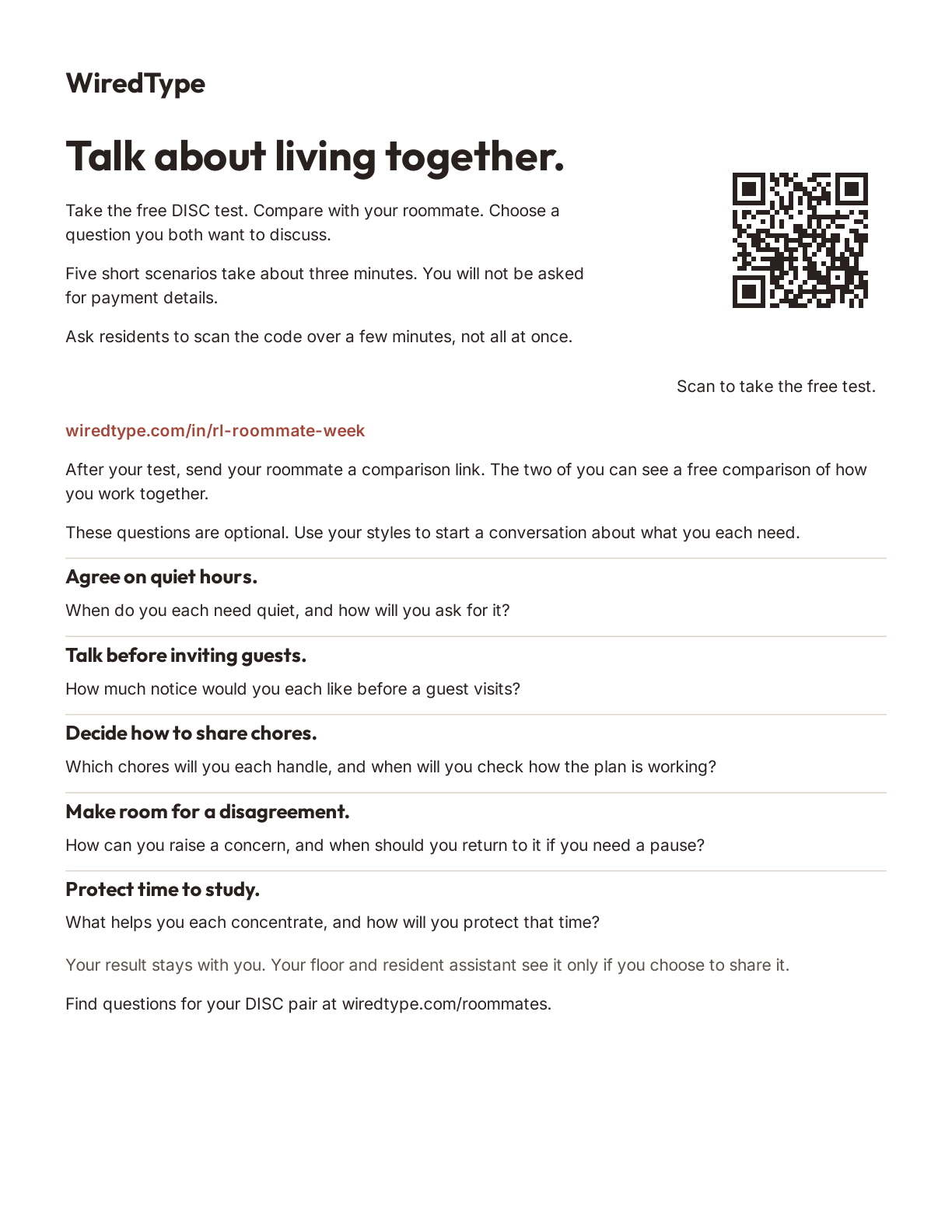
The printable gives resident assistants a QR code for the free test and five questions to offer after roommates compare. Each pair can choose whether to talk and what to share.
Ask residents to scan the code over a few minutes, not all at once.
Download the one-page printable (PDF)